
Reading time:4 min reads



Ummmm…
Like….
Well….
What are filler words, sounds and phrases, and why do we use them?
In short: fillers are empty words that pad your sentences without adding any additional meaning.
They can distract your audience from your message, and leave you looking uncertain of what you are saying.
Public speaking experts strongly recommend eliminating these words and phrases completely, keeping your talk clear and succinct - without distractions.
What are the filler words, sounds and phrases, and why do we use them?
This article uses the collective term “filler words”, but this is really a convenient shorthand for three speech-fillers:
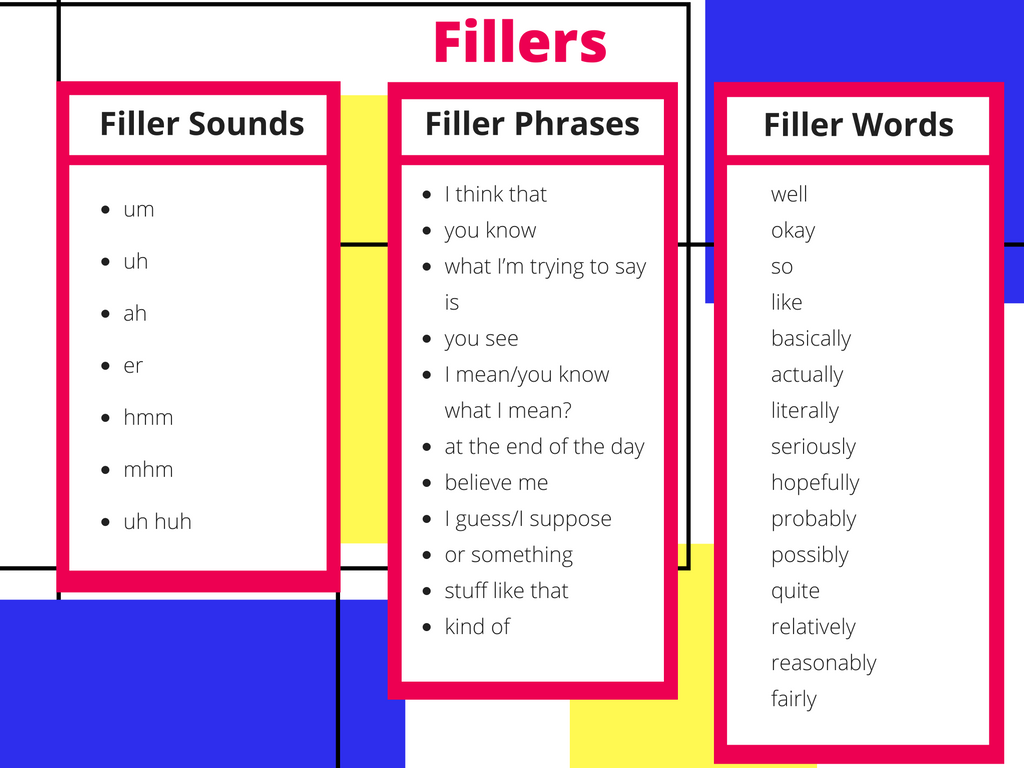
Here is that list again:
Filler Sounds:
Filler Words and hedge words
Filler Phrases
More often than not, we use filler words and phrases such as "um" and "like" because we're thinking or we’re uncertain of what to say next.
Perhaps you are searching for the right word, or trying to formulate your next sentence.
Here are some of the most common reasons we use fillers:
Your specific reasons could be different from someone else's, but here are a few general tips that can help you minimize your use of fillers.
1. Notice them: listen to yourself
Listen to yourself talk, and try to figure out which filler words you are overusing.
Here are three ways to raise your awareness when it comes to filler words:
2. Pause, think, speak
The number one way to get rid of the filler words is to take a couple of seconds to think about what you want to say. These short pauses of complete silence can serve two purposes: they will help you begin powerfully, and it will help you avoid using a filler word.
When you are transitioning from one idea to another, take another pause. Think about what your want to say, then say it. Don’t make these pauses very “heavy” (save longer pauses for more impact) but a two-second pause will help you reduce fillers. Don’t begin speaking until you are ready. Remember: Pause, think, speak.
While we wouldn’t suggest practicing your speech over and over until you sound robotic, if you are struggling with distracting filler words, practicing your speech will help reduce the fillers.
The better you know your presentation, the more clear the words will be in your mind, and you won’t need to use the fillers in place of searching for them. This will result in you using them less.
3. Use short sentences, s-l-o-w-l-y
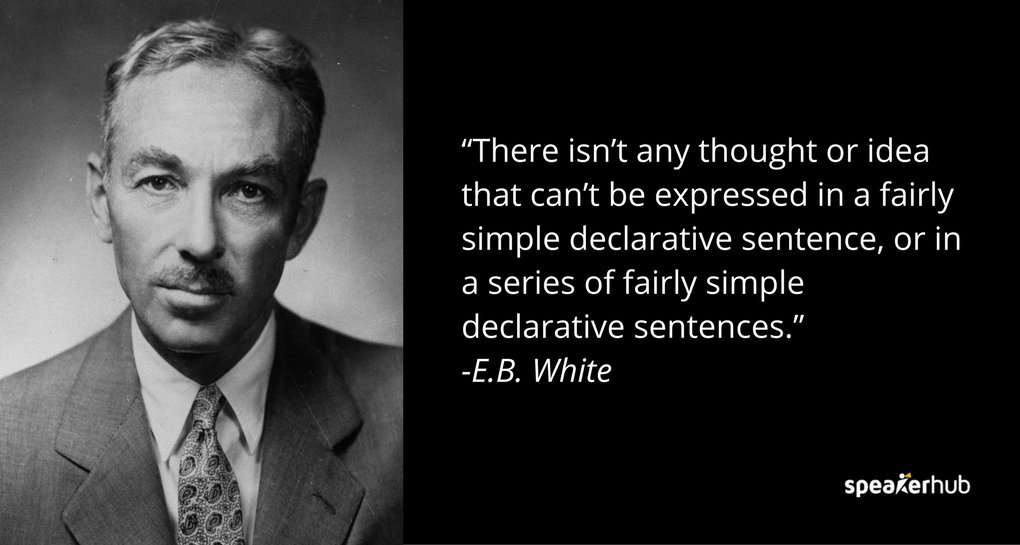
“There isn’t any thought or idea that can’t be expressed in a fairly simple declarative sentence, or in a series of fairly simple declarative sentences.” -E.B. White
Use simple and short sentences. The longer and more complex the sentence, the more likely you to use fillers. Use more simple, clear sentences.
This will help you get your point across clearly, without leaning heavily on fillers.
Lastly, don't be afraid to slow down. When you talk quickly, your brain goes into overdrive trying to supply your mouth with the next set of words, and it becomes very easy to let fillers through.
If you slow down, you'll be able to catch and cut the fillers, with the added benefit of being more understandable.
Remember that even though you are on stage, the occasional “um” or “well” isn't going to drive your audience crazy, after all, the majority of people use them daily in conversation: it’s how we naturally speak. Reducing fillers and keeping your language clean and clear is ideal, but coming off as natural and human is just as important to be relatable.
Have a great technique you’d like to share with others? Let us know!
Popular Categories